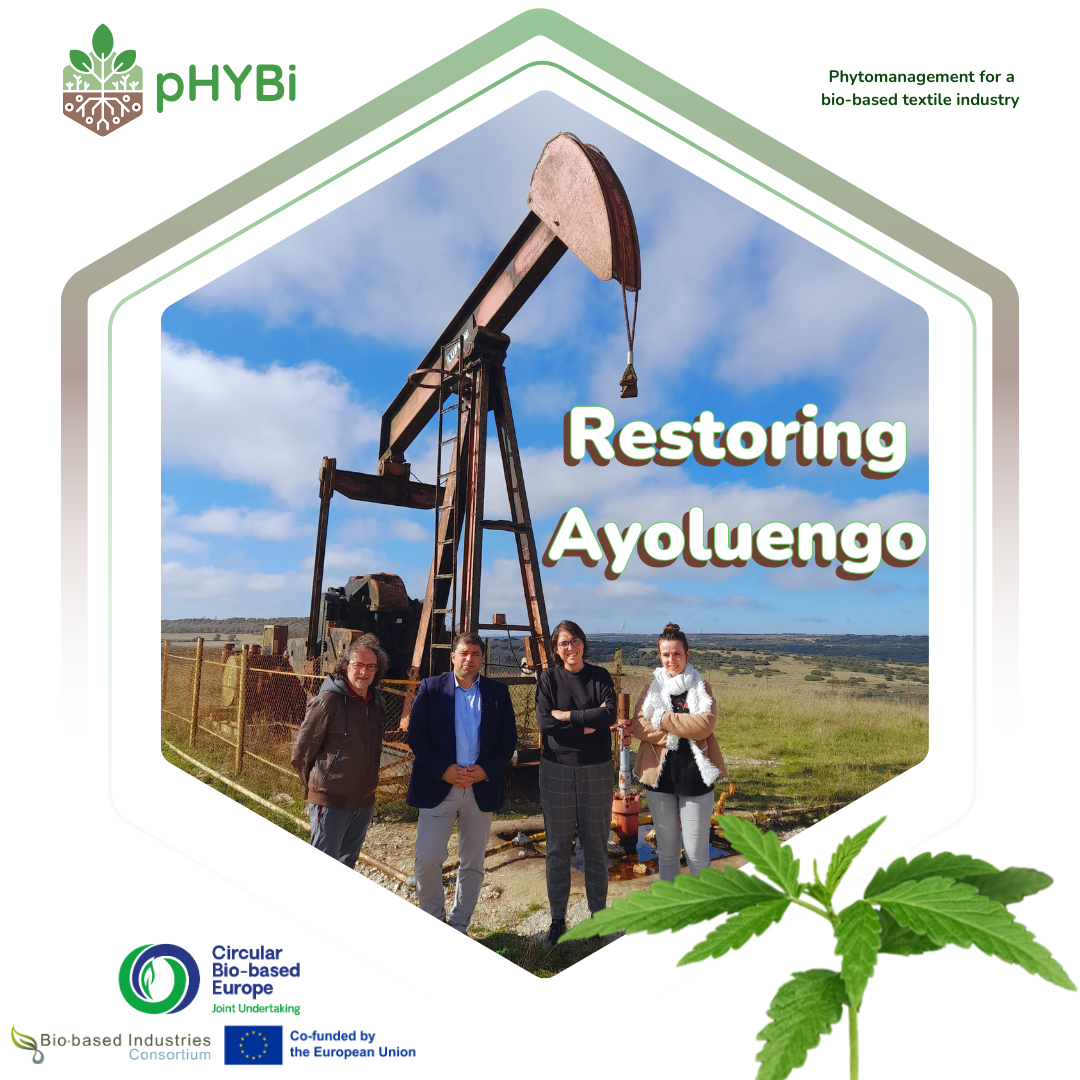
A diverse group of farmers, public authorities, scientists, environmental organisations, territorial development agencies, and cultural actors met at the local Albergue Sargentes de la Lora (Antiguo Colegio), an ideal setting for a dialogue about restoring a post-petroleum landscape through phytoremediation and bio-based innovation.
Sargentes & pHYBi: Bio-based transformation and utilization of a former oilfield
pHYBi aims to decontaminate polluted soils using advanced phytomanagement strategies, thereby transforming degraded land into a source of high-quality, bio-based feedstocks for the circular economy.

The Ayoluengo oilfield in Sargentes, one of pHYBi’s case studies, has suffered decades of oil and hydrocarbon extraction, as well as a paraffin spill in 2024, which has left the soil degraded. The region, however, has a history of agriculture , pastoral systems, cultural traditions, and potential for ecotourism. The workshop therefore aimed to explore how pHYBi’s phytoremediation strategies could support the economic revitalisation of Ayoluengo, demonstrating how a former industrial site could be repurposed to promote sustainable rural development.
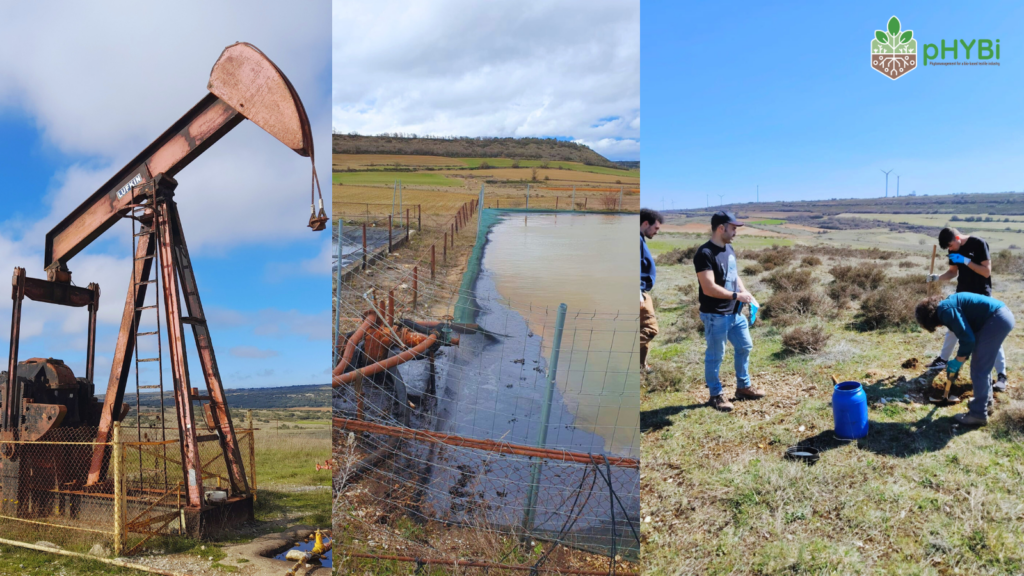
The goal of the workshop was to explore how phytomanagement and bio-based approaches could help restore the area, improve biodiversity and support local value chains. Participants discussed sustainable crops, such as hemp, miscanthus and poplar and looked at common goals, challenges and ways to bring the land back into productive use. The workshop began with an introductory round, during which participants shared information about themselves and their relationship with Sargentes and the wider Burgos region. Many participants highlighted their personal and professional connections to the area. These included farmers working in nearby fields, environmental officers monitoring nature reserves and researchers conducting soil analyses. Local authorities responsible for land use planning were present, as well. This collective grounding set the scene for an open and constructive discussion.
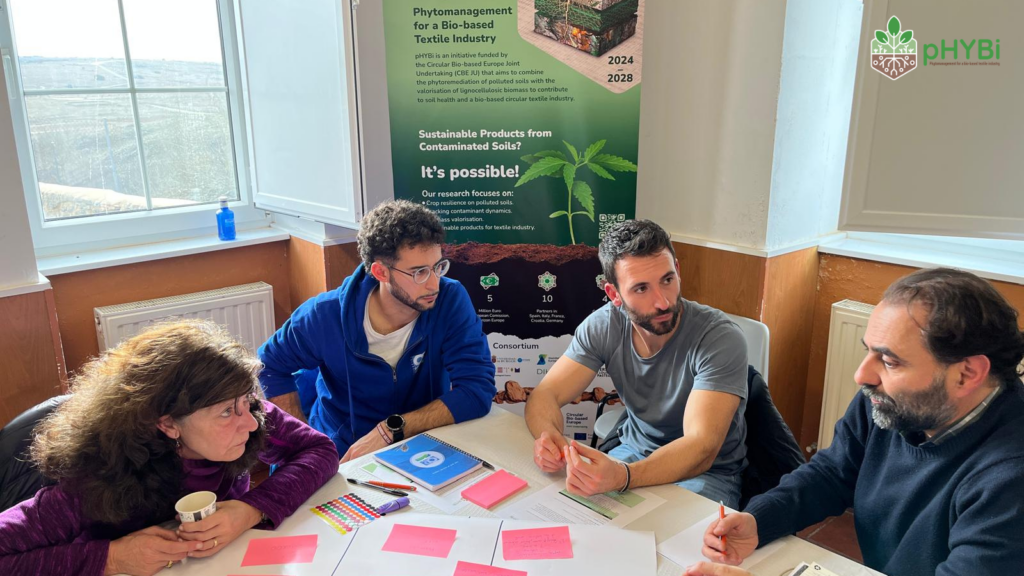
Phytoremediation and bio-based restoration
In a first thematic session, participants shared a common vision of using phytoremediation as part of a broader territorial transition. They stressed that environmental restoration should be guided by scientific evidence, ongoing monitoring, and the ecological characteristics of Ayoluengo. They also highlighted the connection between phytoremediation and productive land use models, such as agroforestry, alternative crops and biomass production, to ensure long-term economic viability and local job creation. They noted that restoration efforts could help build a renewed territorial identity by preserving cultural heritage, enhancing the landscape, and creating tourism opportunities.
Overall, the session showed a clear preference for integrated strategies. At the same time, participants pointed out major challenges, including complex governance, limited funding, territorial constraints, and the need for greater community engagement. Progress will therefore depend on coordinated, multi-actor governance, involving administrations, researchers, companies, land users, and civil society working together toward a shared long-term vision.
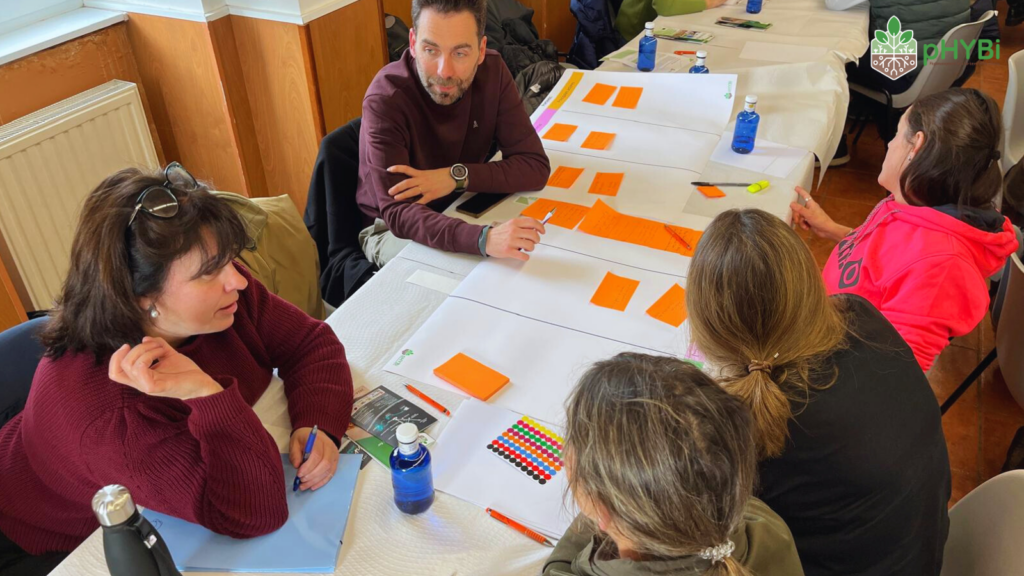
Business Models for Ayoluengo’s Revival
Thematic Session 2 focused on business models, incentives, and future steps for Ayoluengo, moving the discussion from remediation challenges to territorial opportunities. Stakeholders emphasised the role of adapted agriculture and livestock in local recovery, as well as energy transition initiatives such as carbon projects and biomass use. They also discussed cultural and nature-based tourism linked to the Geopark and Natural Park. Achieving economic feasibility will require tailored public funding, flexible regulations, and a mix of private investment and carbon market financing.Coordinated governance is essential for technical implementation, establishing Ayoluengo as a model for rural diversification and post-industrial regeneration.
Conclusion
The Sargentes workshop signals a readiness to transition to a post-petroleum era based on scientific principles, community knowledge and a shared vision. The pHYBi project will now use these insights to further develop concrete strategies for the ecological restoration degraded sites, integrating phytoremediation with sustainable land use, bio-based production, and local economic opportunities.