The Pierrelaye case study: from contamination to a living laboratory for phytomanagement
The site also offers a valuable reservoir of soil microorganisms adapted to these challenging conditions. By studying soil–plant–microbe interactions, including endophytic fungi, using both culture-dependent and culture-independent approaches, pHYBi aims to better understand their role in poplar performance and resilience in marginal soils.
This baseline survey, based on LUCAS sampling, included key soil properties (pH, texture, organic carbon, etc) as well as measurements of total and bioavailable trace elements, providing a robust reference for tracking future changes.
Recent activities: biological indicators and dedometric measurements
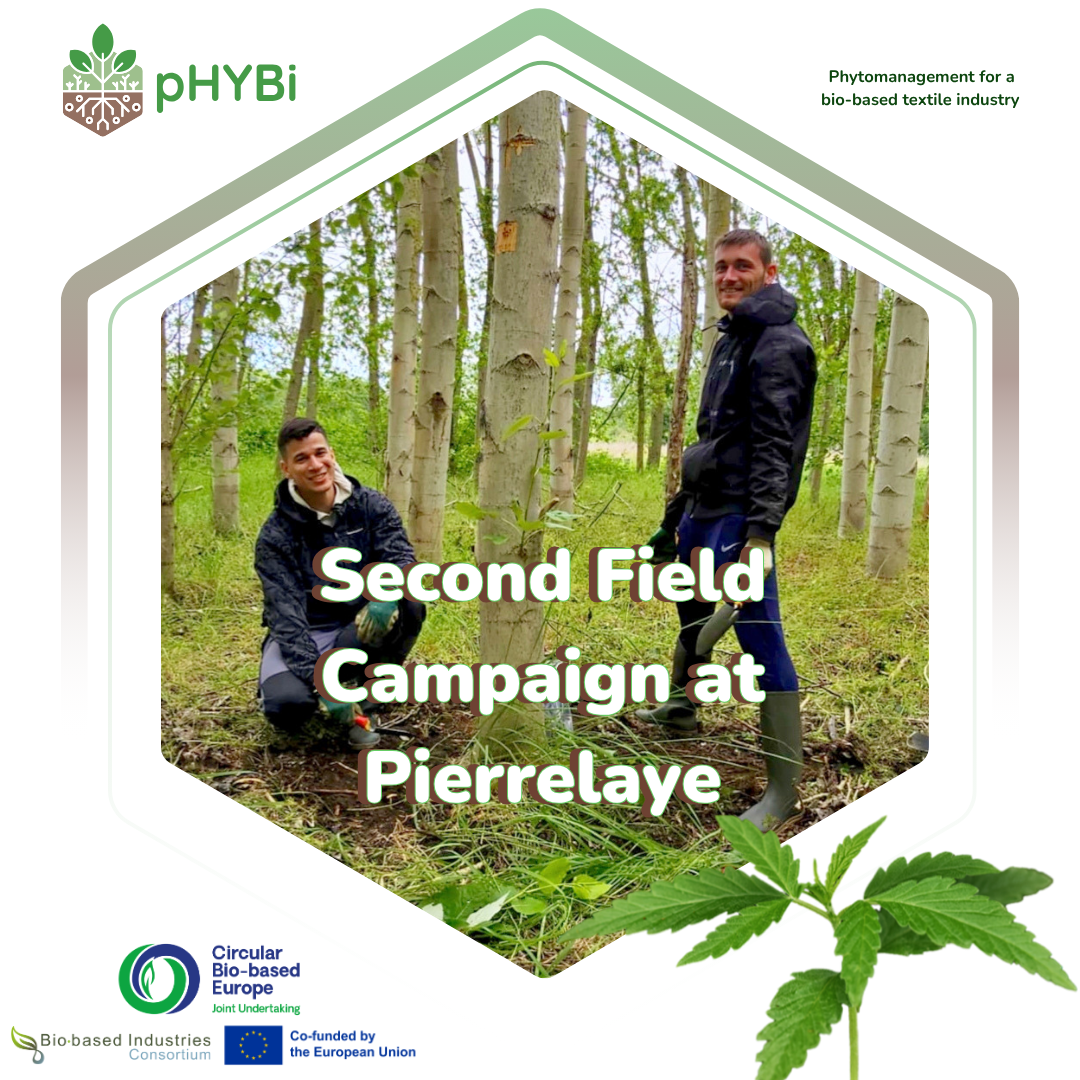
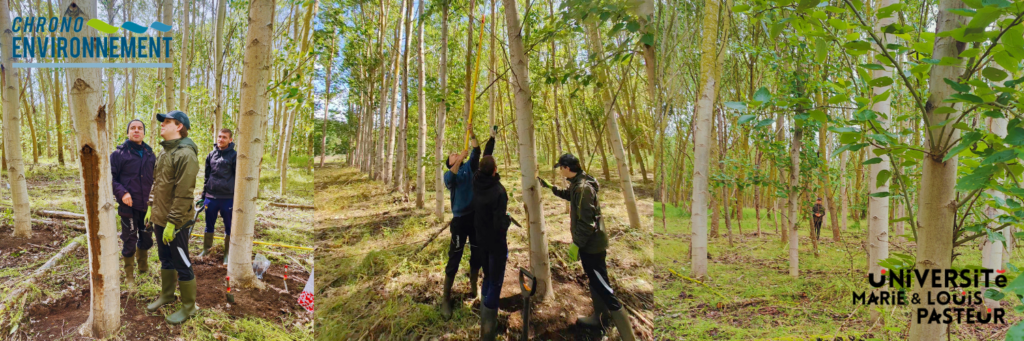
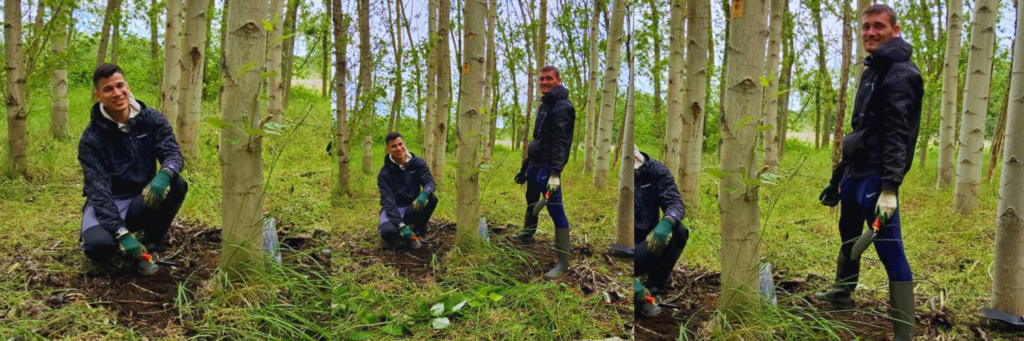
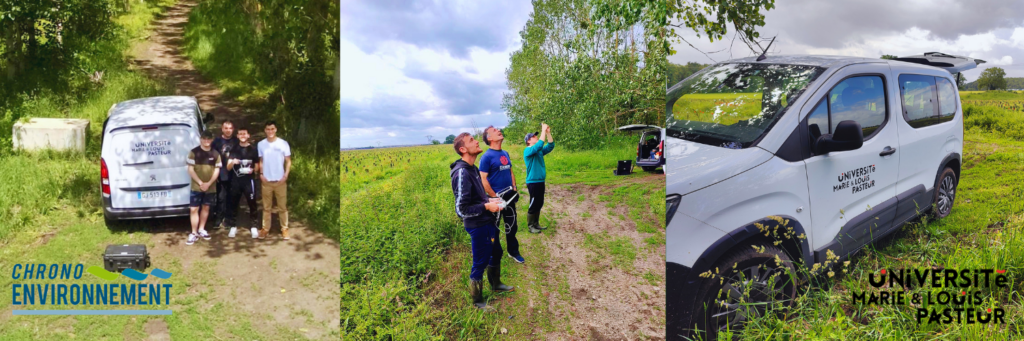
During this year’s campaign, project partners Humberto Castillo-González and Michel Chalot, together with Nicolas Garneret (research assistant engineer) and Enguerrand Denoux (M1 Master’s student completing a 10-week internship within pHYBi), focused on screening for biological indicators and monitoring trees to better understand ongoing phytoremediation processes at the site.
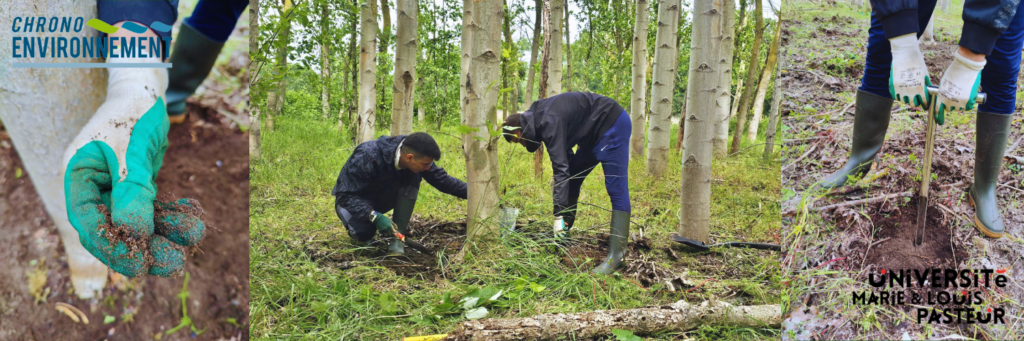
Soil samples were collected for microbial activity and community structure, including assessment of mycorrhizal colonization, providing insight into belowground biological functioning. At the same time, dendrometric measurements were carried out using a laser-based device to characterize growth. Leaf, bark, and wood samples were also collected for chemical analyses, allowing the scientists to track trace-element uptake and accumulation within plant tissues.
To support plantation-scale monitoring, drone imagery was acquired across the approximately 6-hectare plantation. However, the complexity of the canopy structure made data acquisition challenging, leading to further exploration of complementary remote sensing approaches.
What the latest monitoring reveals about fungi, poplars and soil recovery at Pierrelaye
The latest monitoring campaign at the Pierrelaye site highlights how long-term phytomanagement, past land use, and current poplar plantations interact within a complex soil–plant system.
- The site is characterised by coarse, sandy, near-neutral soils, which strongly control water movement, nutrient availability, and trace element behaviour.
- One notable finding concerns the legacy of mycorrhizal inoculation carried out around 15 years ago. Ectomycorrhizal structures are visible on some poplar roots as white, star-like branching patterns. Are these the same fungal partners introduced 15 years ago, or new ones that have taken over in the meantime? That’s still under investigation.
- Among the several poplar varieties present at the plantation, Skado was selected within pHYBi for further focus and valorisation. One of its particular features is its high leaf turnover, which contributes to limiting spontaneous vegetation. Clear differences in vegetation structure are observed between planted and unmanaged areas.
- Phytotoxicity tests show that soils from historically managed plots support higher germination and improved root elongation compared to untreated soils. In parallel, bioavailable trace element concentrations are generally lower in managed areas, consistent with long-term changes in metal behaviour, including reduced mobility in soils and potential transfer into plant biomass
- Finally, poplar trees and their rhizosphere act as active microbial reservoirs, supporting diverse microbial communities. Metagenomic data further show that this biological activity extends into deeper soil layers, confirming that subsoil compartments are far from inert.