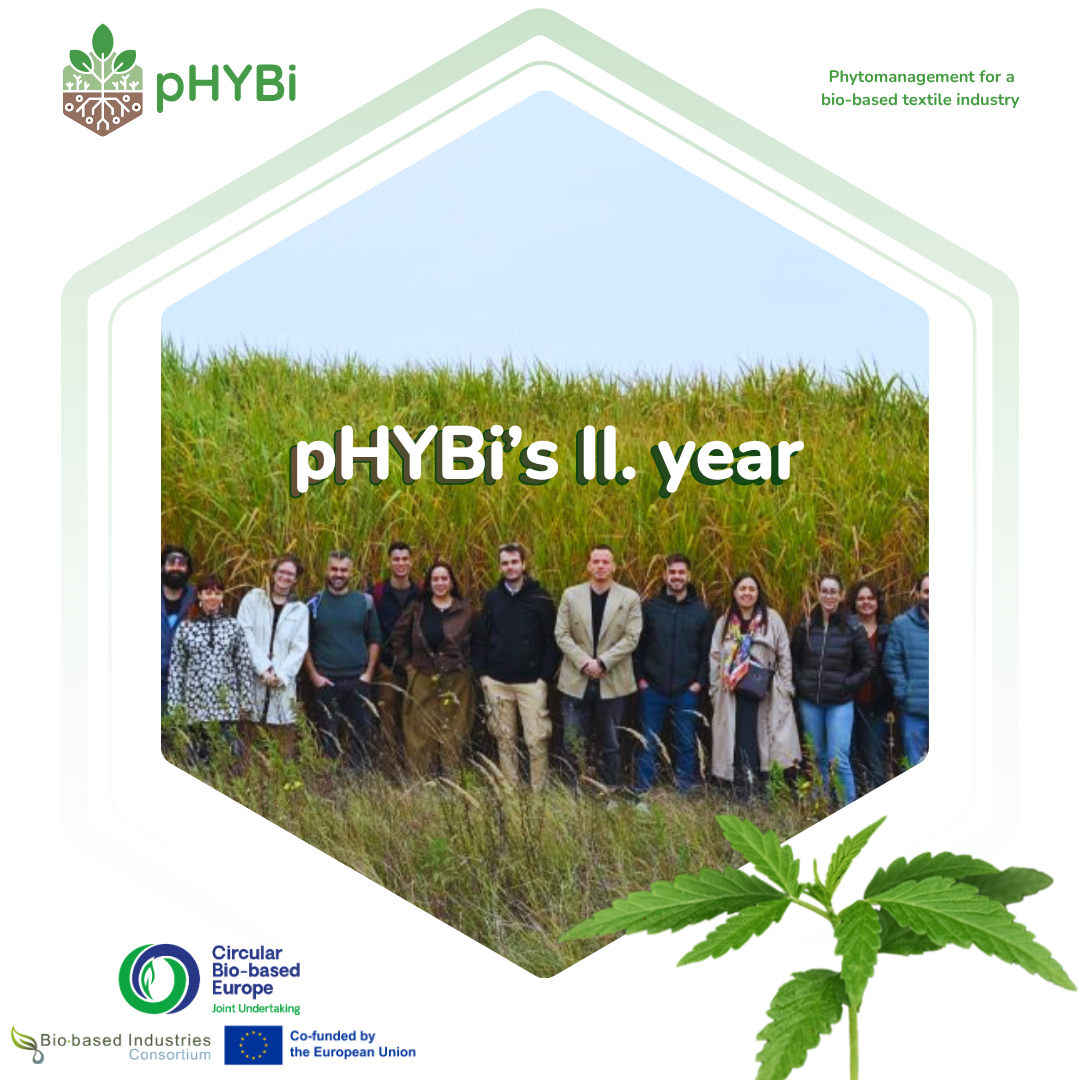
Progress at pHYBi’s case study sites
Over the past two years, pHYBi has advanced research at case study sites in Spain, France and Croatia. Their different environmental conditions and contamination profiles allow the project to explore how phytomanagement strategies can be adapted to different types of marginal and contaminated land.
Researchers have been analysing soil, microbial and vegetation characteristics to assess the effects of different remediation approaches. At the French case study, initial results suggest that tree bark can act as a sink for contaminants and that the benefits of earlier microbial treatments may persist and spread over time. At the Oviedo site in Spain, long-term trials indicate that trees supported by fungi or bacteria achieved greater growth than untreated trees after 15 years. In Croatia and Spain, Miscanthus × giganteus is being tested under challenging conditions, including oil and heavy-metal contamination and salinity. The biomass will be harvested in 2027 and assessed for potential bio-based applications.
At the same time, monitoring activities using drones have progressed across the case study sites. Remote sensing data have been compared with field measurements to assess vegetation development and explore how digital tools can support the monitoring of larger areas.
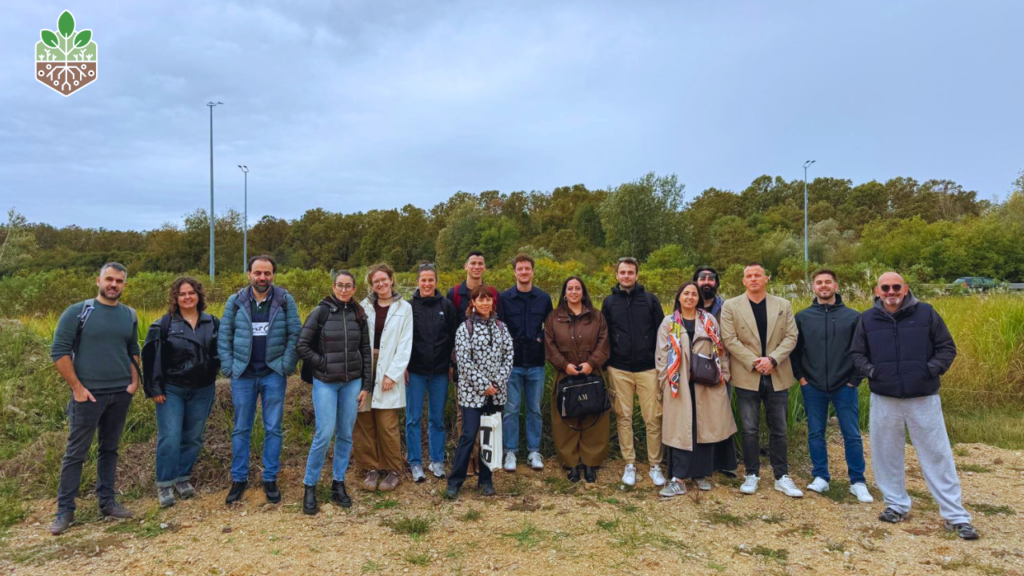
Developing and optimising phytomanagement strategies
Alongside the field activities, pHYBi has continued to develop and optimise phytomanagement approaches through controlled experiments. Researchers are testing combinations of microbial inocula, biochar and vermicompost to understand how plants, microorganisms and soil amendments interact and which approaches are most promising under different conditions. Microbial analyses are also helping to identify bacteria that could support contaminant degradation or improve plant tolerance to challenging environments. Promising approaches are now moving towards larger-scale validation. First pilot plots have been established at the case study sites, while selected strategies are being prepared for further field testing.
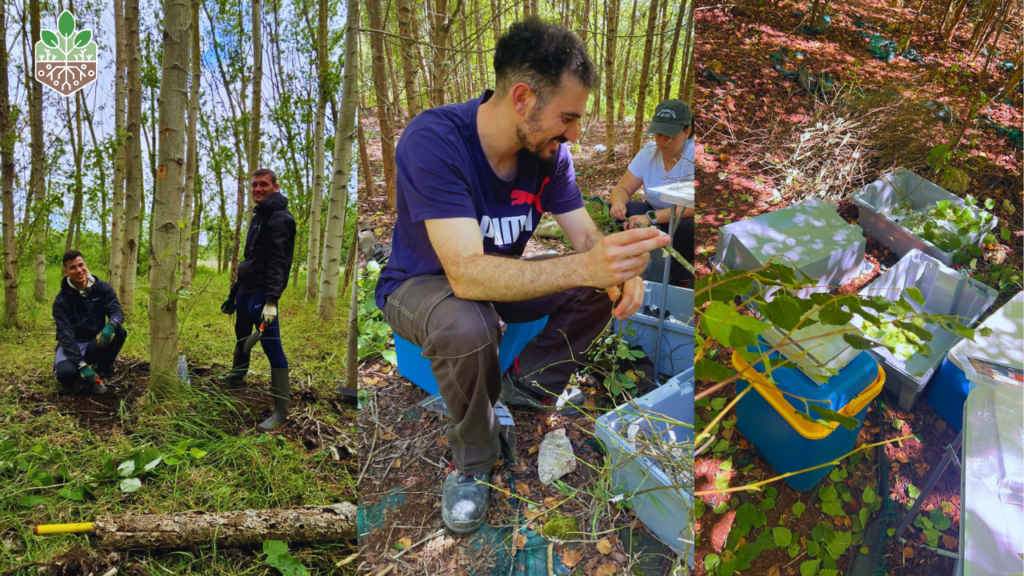
Textile products from contaminated biomass
Phytomanagement does not end with the remediation or management of the soil. A key question for pHYBi is what can be done with the biomass produced on contaminated or marginal land. The consortium is therefore characterising the harvested biomass and developing processes to separate and use different biomass fractions. Potential pathways include the use of hemicellulose in pigments and the use of cellulose and lignin in coating applications. Partners are also exploring possible markets and valorisation routes for these materials.
This allows pHYBi to investigate an integrated pathway from contaminated land to biomass and to potential bio-based products. The aim is to understand how phytomanagement could not only contribute to the management of degraded land but also provide biomass for circular bioeconomy value chains. To support this approach, the consortium is developing a digital connecting phytoremediation, biomass production and biomass processing. Environmental, economic and social aspects are being assessed in parallel.
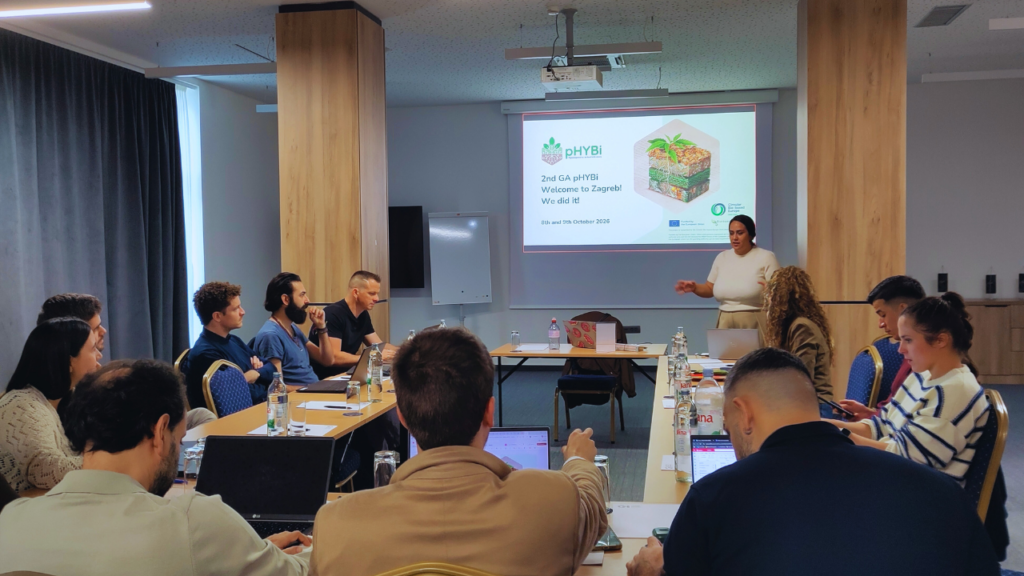
Learning from other projects
The meeting in Zagreb also provided an opportunity to look beyond the pHYBi consortium. During a dedicated exchange, pHYBi met with the related Horizon Europe projects HALO-TEX and IASIS.
All three projects investigate links between phytoremediation, sustainable biomass production and the bioeconomy. The exchange allowed the projects to compare experiences, discuss common challenges and identify areas in which their research and knowledge can complement one another.
Seeing phytomanagement in practice
The consortium visit to Donja Gračenica highlighted the practical challenges that pHYBi aims to address. The site was affected by a major oil spill several years ago and is also affected by heavy-metal contamination.
Particula began cultivating Miscanthus × giganteus at the site in spring 2025. Within pHYBi, different approaches will be investigated there, including the use of mycorrhizal and other symbiotic fungi, bacterial inocula and fertilisation strategies.
Seeing the site first-hand gave the consortium a better understanding of the local conditions and demonstrated the importance of moving beyond laboratory and pot experiments towards field-scale application.
What comes next?
As pHYBi enters its third year, the project is moving from research towards larger-scale field application. Promising phytomanagement strategies will be further tested under real-world conditions, while work continues on processing the resulting biomass and exploring potential bio-based applications.
The next phase will focus on bringing these activities together and assessing how the pHYBi approach can be transferred beyond the individual case study sites. Upcoming scientific publications will also share the project’s first research results. Together, these activities will help demonstrate how phytomanagement can combine the management of contaminated land with sustainable biomass production and valorisation